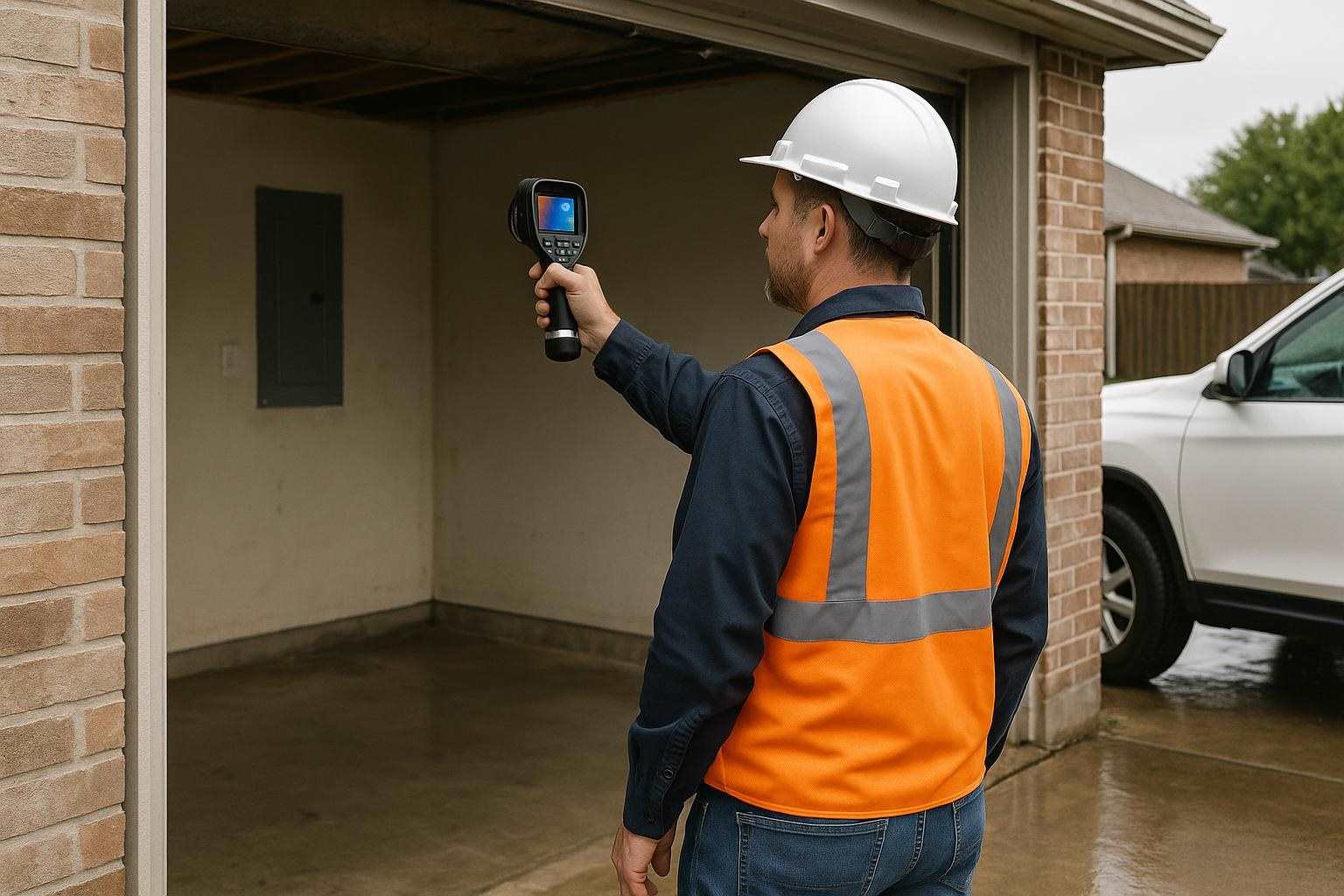
A buyer walks into a Dallas property and notices a faint ceiling stain near an exterior wall. The surface looks dry, but an infrared scan shows a cool, irregular area extending beyond the visible mark. That pattern may justify moisture testing or a closer roof or plumbing review; it does not identify the leak. Used properly, thermal imaging helps owners and buyers decide where to investigate and what evidence to request. Its value is directing follow-up, not treating a colorful image as a diagnosis.
What an infrared scan can reveal
A thermal camera records surface temperatures and displays differences ordinary vision may miss. In a building inspection, those contrasts can help locate missing insulation, air leakage, thermal bridges, overheated electrical components, uneven heating or cooling, and areas affected by evaporation or moisture movement.
The image is a clue about a surface condition. A cool ceiling strip could relate to insulation, an air pathway, framing, ductwork or damp materials. A warm electrical connection may deserve prompt evaluation, but the camera does not establish the fault or determine whether the component is safe to operate.
Thermal inspection is most useful when the question is, "Where should we look next?" It is less useful when someone expects a scan to certify a wall, roof, appliance or property as sound.
Where the method earns its place
For a prospective home buyer, infrared inspection can add direction to a visual home inspection Dallas residents may already be arranging. It can help prioritize questions about drafty rooms, inconsistent comfort, suspected roof intrusion or an unexplained stain. For an owner, repeat scans under comparable conditions may show whether repairs changed a heat-loss pattern, provided the comparison is made carefully.
Commercial properties bring different decisions. A scan may support investigation of hot or cold zones, screen accessible electrical equipment, or identify sections of a roof or building envelope that merit moisture testing. It can also guide energy-efficiency work by showing where conditioned air appears to escape or insulation coverage may be inconsistent.
The choice depends on the question. Visible cracking may call for a standard visual review first, while an intermittent temperature pattern, hidden air movement or an inaccessible roof area may justify infrared inspection. For a large facility, tie the scan to a defined scope rather than treating it as an undirected search.
The limitations behind the colors
Infrared cameras do not see through walls. They read infrared energy emitted from a surface, and the result is influenced by surface finish, reflected heat, sunlight, wind, indoor and outdoor temperatures, humidity, camera distance and angle. Glass, shiny metal and reflective surfaces can be especially misleading because they may reflect another heat source rather than show the temperature of the material behind them.
Conditions can also erase useful contrast. A roof may show no meaningful pattern after weather changes, a heating system may be off, or a leak may have dried before the inspection. Thick finishes, furnishings and stored materials can conceal areas needing review.
These are practical limitations, not technical footnotes. A normal-looking image does not rule out a defect, and an unusual image does not prove one. Interpretation requires building knowledge and an understanding of how heat and moisture move through the particular assembly.
Moisture detection needs a second step
Thermal imaging can help locate a temperature pattern associated with moisture, especially when evaporation or wet materials create measurable contrast. It cannot measure moisture content simply because an area appears blue or cooler. Cold insulation, shadowing, air leakage and different materials can produce similar visuals.
When water intrusion is a concern, follow-up may include a moisture meter, probing where appropriate, visual review of flashing and sealants, plumbing evaluation, roof assessment or controlled access to concealed spaces. The method depends on the material and suspected source. Any opening, electrical work or roof access should be handled by an appropriately qualified professional, with safety requirements and local rules checked first.
For a buyer, the report should distinguish an observed thermal anomaly from a confirmed defect. That distinction matters when requesting records, negotiating repairs or deciding whether more invasive investigation is justified.
Prepare the property for useful results
Preparation affects what can be seen. Give the inspector access to mechanical rooms, electrical panels where permitted, attic entries, safely accessible roof areas and rooms with reported comfort problems. Keep vents, radiators and electrical equipment in their normal operating state unless the inspection plan says otherwise.
Mention recent rainfall, HVAC problems, renovations, known leaks and rooms that behave differently from the rest of the building. Do not cover a suspected area with newly placed furniture or stored goods. For a commercial building inspection, provide a floor plan if available and identify occupied areas, restricted zones, operating schedules and equipment that should not be approached.
Turn findings into a decision, not a guess
Ask for the conditions of the scan, locations reviewed, observed pattern and recommended verification step. A useful report should separate what the camera detected from what the inspector suspects and what another trade must confirm.
Use this checklist:
– Is there a specific question the scan is meant to answer?
– Were weather, HVAC operation, access and surface conditions suitable?
– Does the pattern correlate with a visible symptom or building component?
– What follow-up test would confirm or reject the concern?
– Who is qualified to perform that repair or diagnostic work?
For energy-efficiency decisions, combine thermal findings with utility information, air-sealing or insulation evaluation and HVAC assessment. For moisture concerns, verify the source before repairing finishes. For electrical concerns, arrange a qualified electrical review rather than relying on the image alone.
Requirements affecting inspections, repairs, electrical work, roofing and building alterations can change, so consult current official guidance and applicable local professionals. The strongest use of infrared inspection is practical and restrained: narrow the search, document a pattern, then verify the cause before spending money or making a major property decision.